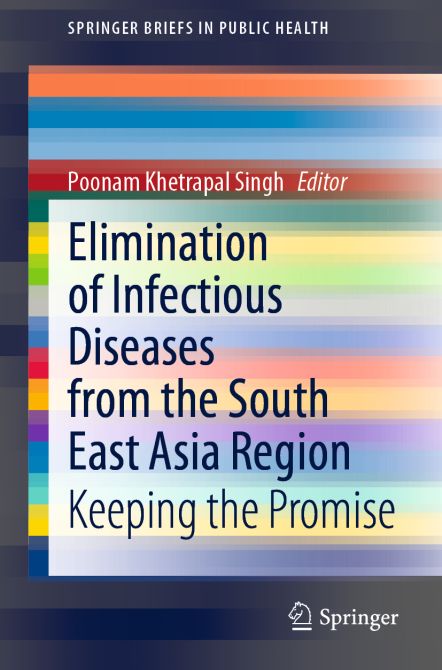
Elimination of Infectious Diseases from the South East Asia Region
Keeping the Promise
| Auflage | 2022 |
| Seiten | 118 pp. |
| Verlag | Springer |
| ISBN | 9789811655654 |
| Artikel-Nr. | 570087 |
Noch nicht erschienen, ca. Dez. Liefertermin 1-3 Tage nach Erscheinen
Produktbeschreibung
This book discusses the historical context, country experience, and best practices that led to eliminating infectious diseases from the WHO’s South-East Asia Region, such as malaria, lymphatic filariasis, yaws, trachoma, and mother-to-child HIV in the mid-twentieth and twenty-first century. The UN Sustainable Development Goals (3.3) targets to end AIDS, tuberculosis, malaria, and neglected tropical diseases and combat hepatitis, water-borne diseases and other communicable diseases by 2030. In this context, this book is of high significance to countries from the SEA region and around the globe. It helps create national strategies and action plans on infectious disease elimination and thus attaining SDG 3.3.
Covers communicable disease elimination in the South Asia and South East Asia region
Talks about best practices in achieving elimination which could be the pathway for future elimination
Includes the major achievements of public health initiatives in the South Asia and South East Asia region
Covers communicable disease elimination in the South Asia and South East Asia region
Talks about best practices in achieving elimination which could be the pathway for future elimination
Includes the major achievements of public health initiatives in the South Asia and South East Asia region
