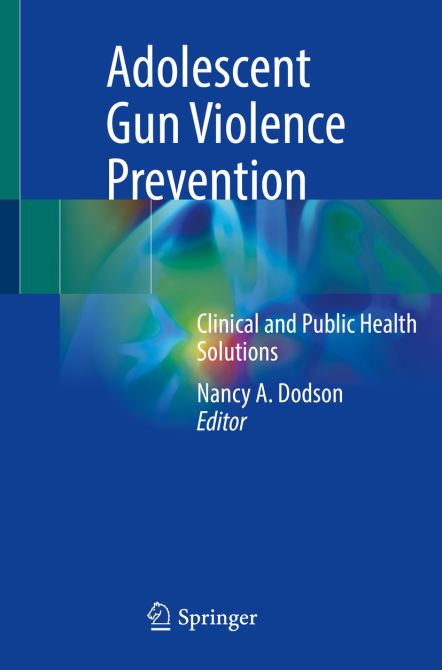
Adolescent Gun Violence Prevention
Clinical and Public Health Approaches
| Auflage | 2021 |
| Seiten | 140 pp., 20 illus. |
| Verlag | Springer |
| ISBN | 9783030847098 |
| Artikel-Nr. | 569892 |
Lieferzeit ca. 5 Werktage
Produktbeschreibung
Gun violence is a major cause of morbidity and mortality among children and teens in the U.S. Each year, gun violence kills approximately 2,700 and injures approximately 14,500 children; the overwhelming majority are teenagers. Gun violence is the leading cause of death for black U.S. teens. Against the daily backdrop of homicides, suicides, and unintentional shootings that claim young people’s lives, a recent spate of high-profile tragedies involving children, such as the Newtown mass shooting in 2012 and the Parkland mass shooting in 2018, have reinvigorated a national debate about the role of guns in our private and public spaces. Physicians, and in particular pediatricians, have become increasingly vocal about the need to address the epidemic of gun violence in the U.S.
This book serves as an in-depth, comprehensive guide to adolescent gun violence prevention. It describes the epidemiology of teen gun violence in the U.S. by focusing on the parallel epidemics that claim the most lives: gun suicide among rural white males, and gun homicide among urban black males. It also offers in-depth reviews of three key concepts that are crucial to reaching a deeper understanding of gun violence. A review of the "public health approach" also educates readers on the concept of seeing gun violence as an environmental problem that can be fixed with environmental solutions similar to prior public health victories in car safety, tobacco, lead paint, and infectious disease prevention.
The focus of the text shifts from concepts of underlying gun violence to specific methods of intervention. It describes the scope of scientific evidence about physician counseling on gun safety as well as violence interruption programs that prevent gang-related gun deaths among urban teenagers. These violence interruption programs are run out of emergency departments. When a patient presents with a gang-related gunshot injury, the emergency department reaches out to a "violence interrupter" that goes into the community to prevent a retaliatory shooting. They use mediation and other conflict resolution skills. These programs have been proven to be effective in areas such as The Bronx and Chicago. Research priorities are also identified as well as legislative and regulatory solutions that would have the largest impact in terms of lives saved.
Two chapters towards the end of the book focus on methods that a physician can use to be proactive in trying to prevent gun violence involving their patients. Based on child psychiatry literature on violence, suicide and homicide, the process of implementing a screening process for violence, either self-harm or harm towards others, into clinical examinations is discussed. The relationship between media exposure, such as violent video games, and violence is also a focal point. In addition to evidence-based data, physicians are also instructed on how to promote healthy media use among patients and their families.
This first of its kind book is a valuable reference for pediatricians, family medicine physicians, emergency physicians, and adolescent medicine physicians who want to become more involved in gun violence prevention. Because it covers clinical interventions, community interventions, research priorities, advocacy priorities, and a deep conceptual framework, it will be useful to both community and academic physicians.
Written for a variety of clinicians that treat adolescent patients
Offers an in-depth review of three key concepts that are crucial to understanding of gun violence
Covers clinical and community interventions
This book serves as an in-depth, comprehensive guide to adolescent gun violence prevention. It describes the epidemiology of teen gun violence in the U.S. by focusing on the parallel epidemics that claim the most lives: gun suicide among rural white males, and gun homicide among urban black males. It also offers in-depth reviews of three key concepts that are crucial to reaching a deeper understanding of gun violence. A review of the "public health approach" also educates readers on the concept of seeing gun violence as an environmental problem that can be fixed with environmental solutions similar to prior public health victories in car safety, tobacco, lead paint, and infectious disease prevention.
The focus of the text shifts from concepts of underlying gun violence to specific methods of intervention. It describes the scope of scientific evidence about physician counseling on gun safety as well as violence interruption programs that prevent gang-related gun deaths among urban teenagers. These violence interruption programs are run out of emergency departments. When a patient presents with a gang-related gunshot injury, the emergency department reaches out to a "violence interrupter" that goes into the community to prevent a retaliatory shooting. They use mediation and other conflict resolution skills. These programs have been proven to be effective in areas such as The Bronx and Chicago. Research priorities are also identified as well as legislative and regulatory solutions that would have the largest impact in terms of lives saved.
Two chapters towards the end of the book focus on methods that a physician can use to be proactive in trying to prevent gun violence involving their patients. Based on child psychiatry literature on violence, suicide and homicide, the process of implementing a screening process for violence, either self-harm or harm towards others, into clinical examinations is discussed. The relationship between media exposure, such as violent video games, and violence is also a focal point. In addition to evidence-based data, physicians are also instructed on how to promote healthy media use among patients and their families.
This first of its kind book is a valuable reference for pediatricians, family medicine physicians, emergency physicians, and adolescent medicine physicians who want to become more involved in gun violence prevention. Because it covers clinical interventions, community interventions, research priorities, advocacy priorities, and a deep conceptual framework, it will be useful to both community and academic physicians.
Written for a variety of clinicians that treat adolescent patients
Offers an in-depth review of three key concepts that are crucial to understanding of gun violence
Covers clinical and community interventions